



With the launch of the Deposit Return Scheme (DRS) across England, Scotland and Northern Ireland set for 1 October 2027, convenience retailers are entering the biggest change to drinks recycling in a generation. While much of the industry discussion has focused on compliance, registration and reverse vending machines, the reality is more nuanced. For symbol groups, independents and forecourt operators, the decisions made over the next year will influence not only operational readiness, but also footfall, customer loyalty and long-term competitiveness.
Drawing on insights from Exchange for Change, Coca-Cola Europacific Partners and TOMRA Collection, this article explores what retailers need to know about their obligations, the financial realities behind the scheme, and the opportunities available to stores that choose to position themselves as convenient recycling destinations. As the countdown to October 2027 continues, the key question is no longer whether DRS is coming, but how retailers can make it work for their business.
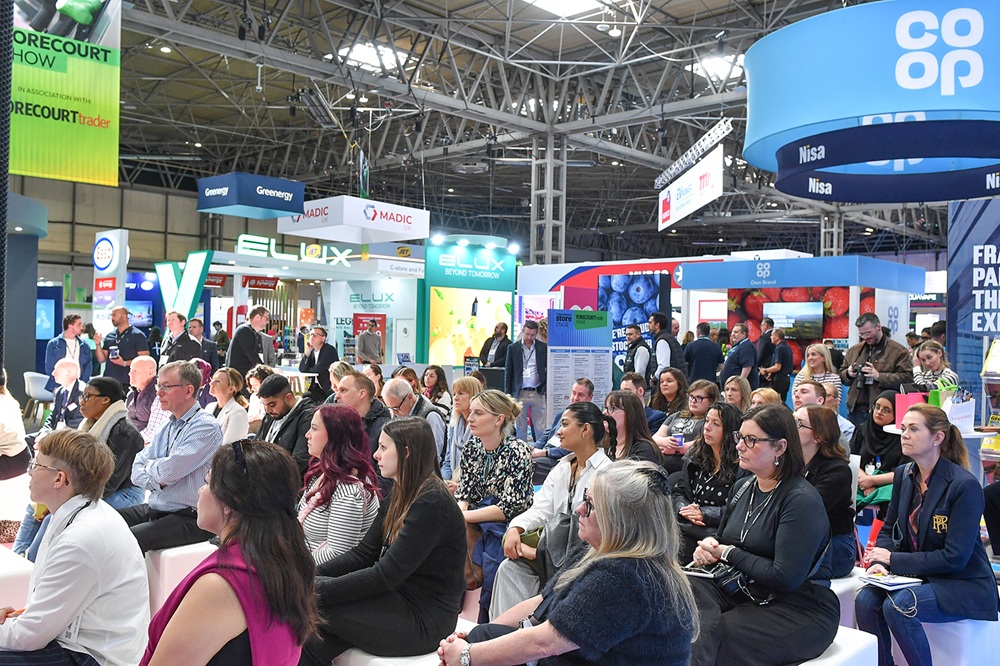
Based on one session delivered at the National Convenience Show, part of the UK Food & Drink Shows 2026. Edited into an evergreen article by William Reed Ltd.
Speakers
- Samantha Walker, DRS project lead, Coca-Cola Europacific Partners
- Raymond Gianotten, interim operations development lead, Exchange for Change
- Sondre Henningsgård, UK managing director, TOMRA
Host not quoted as opinion-speakers: Aidan Fortune, editor, Convenience Store.
Quick read summary
- Every retailer selling in-scope drinks containers will need to charge a deposit and register with the Deposit Return Scheme from October 2027, regardless of whether they host a return point.
- Retailers obligated to host a return point will need to register with Exchange for Change, or apply for an exemption. Retailers not obligated to host a return point do not need to register, but may consider applying to host a voluntary return point if applicable to their business situation.
- Operating a return point is not mandatory for all stores, but retailers should assess their space, customer missions and local competition well before launch to understand if they are obligated to host a return point and if so, how they want to make this work for this business.
- The scheme will be funded by producer fees and recycling revenues, with financial grant support available for smaller retailers.
- Evidence from existing international schemes suggests return points can drive repeat visits, larger baskets and increased customer loyalty when managed effectively.
- The most important first step is understanding your store's retail selling space, as this will determine whether you may qualify for an exemption from hosting returns.
What does the DRS aim to achieve?
On 1 October 2027, a DRS for single-use drinks containers made from PET plastic, aluminium or steel between 150ml and 3 litres will launch across England, Scotland and Northern Ireland. The scheme will be operated by Exchange for Change. Raymond Gianotten, Interim Operations Development Lead at Exchange for Change, has worked in deposit schemes for almost 20 years and previously ran the Dutch scheme. He set out three reasons the policy exists: higher collection volumes, cleaner material producing better recycling quality, and less litter on the street.
What will the DRS require stores to do?
There are two separate retailer obligations.
The first is that every store selling in-scope containers must charge the deposit and make it clear to consumers that they are being charged the deposit.
The second requirement relates to hosting a return point. Under the legislation, grocery stores are required to operate as a return point for in-scope containers. However, there are exemptions:
- Grocery retailers located in an urban area with retail selling space below 100 square metres are automatically exempt from the obligation to host a return point. They may however apply to opt in and host a voluntary return point.
- Exemptions for grocery retailers may be granted under two categories – 1) where a business is in close proximity to another return point, or 2) where it is not possible (or easy) to host a return point due to the location, layout, size, design or construction of the premises.
Exchange for Change will provide further information on eligibility for exemptions and the process for grocery retailers to follow if they wish to apply for an exemption to hosting a return point.
Is there financial support available to retailers?
There are two financial support mechanisms available to retailers regarding the scheme:
Return handling fee: This is paid to return point operators and contributes to the costs of the business hosting and operating a return point. It is calculated based on several criteria set out in the DRS regulations.
Earlier this year, Exchange for Change published the return handling fee amounts following a period of industry engagement and consultation. There will be two tiers of return handling fees available to return point operators:
- Manual return points – 3p per container
- Automatic return points
- Tier 1 – 5p per container, up to 225,000 in-scope items returned annually
- Tier 2 – 1.3p per container, for annual in-scope returns in excess of 225,000.
Grants for small retailers to support the purchase of reverse vending machines: Grants of up to £6,000 will be available to smaller independent retailers investing in a reverse vending machine. Further information on the eligibility and process for applying for a grant will be made available shortly by Exchange for Change.
Is a return point a cost or a footfall driver?
The panel sought to demonstrate the positive benefits to stores which operate as a return point in driving footfall.
Sondre Henningsgård, UK managing director at TOMRA Collection, shared that:
"The returning recyclers are valuable shoppers because as it's usually part of a planned activity, they also usually spend more on that shopping trip."
Sondre Henningsgård, UK managing director, TOMRA Collection
A returned container is usually the focus of a scheduled visit and is also likely to result in a purchase being made in-store. This is the kind of mission-led footfall that convenience retailers are chasing. The largest return point in Europe is currently a petrol forecourt in Ireland running three multi-feed machines and processing roughly ten million containers a year, a site that treated the obligation as a business line.
During the session retailers voiced concerns about space required to operate a return point due to the size of reverse vending machines. Henningsgård argued that not providing a return point could have adverse consequences , particularly if a neighbouring store was hosting a return point which could direct footfall to their store.
Henningsgård also sought to reassure retailers that operating a reverse vending machine is generally very manageable and involves providing space for the machine, ensuring it is operational and presentable and that staff are available to support consumers and manage the collected containers. Whilst these might be additional day-to-day tasks they should be easily incorporated into normal store routines and practices.
Will shoppers cope with the change?
Samantha Walker, DRS project lead at Coca-Cola Europacific Partners, has worked with the company in commercial roles for over 25 years and is overseeing an 18-month transition. She pointed to the Republic of Ireland, where collection rates rose from 49 to 90 per cent and litter fell by half after launch.
"Actually, people adapt quickly, particularly when there's a financial incentive to do so."
Samantha Walker, DRS project lead, Coca-Cola Europacific Partners
Behavioural change at the sales fixture is smaller than most retailers expect, with 75 to 80 per cent of shoppers making no format change at all after launch. Preparation is therefore less about range and more about communication. Walker recommended shelf-edge pricing showing the product price and the deposit separately, alongside staff who can explain where a deposit can be redeemed if the store is not a return point.
In the Republic of Ireland, recycling rates rose from 49 to 90 per cent and litter fell by half after the deposit return scheme launched.
How should a retailer prepare for the Deposit Return Scheme before October 2027?
The speakers approached the issue from different angles, with all their advice forming a practical roadmap for retailers planning for DRS implementation.
1. Measure your retail selling space accurately. Whether you qualify / want to apply for an exemption or are expected to host a return point depends on the size of your store. This should be the starting point for every retailer.
2. Decide early whether to become a return point. Don't view the decision purely as a compliance exercise. Weigh the operational requirements against the potential footfall, basket spend and loyalty benefits that return services can generate.
3. Understand the funding model. Familiarise yourself with handling fees and available support, including grants of up to £6,000 for eligible independent retailers investing in reverse vending technology.
4. Plan your in-store operation. Whether using manual take-back or a reverse vending machine, consider storage, staffing, cleaning routines, waste collections and customer traffic flow well ahead of launch.
5. Review your local competitive landscape. If nearby stores offer return point services and you do not, customers may choose to combine recycling and shopping trips elsewhere.
6. Prepare staff for customer questions. Teams should understand how deposits work, which containers are included, where returns can be made and how the process operates within your store.
7. Update pricing and communication materials. Clear shelf-edge labels and point-of-sale messaging will help customers understand the difference between the product price and the refundable deposit.
8. Work closely with suppliers. Drinks manufacturers are already preparing new barcodes and scheme logos to be displayed on in-scope drinks containers. Retailers should stay informed about packaging changes and implementation timelines for the scheme.
9. Treat DRS as a customer experience opportunity. The most successful retailers in established schemes have viewed return point operations as a service that creates repeat visits rather than simply another regulatory obligation.
FAQ's
When does the deposit return scheme start, and who has to take part?
The scheme launches in the UK on 1 October 2027. Every retailer selling in-scope drinks containers must charge the deposit on those drinks. Grocery retailers will need to consider the guidance and decide if they are obligated to host a return point, and if so whether they are inclined to apply for an exemption.
Do I have to install a reverse vending machine?
No. Manual take-back is possible, and may be particularly appealing for retailers who may be more likely to take back lower volumes of containers. Some exemptions to operating a return point are available and applicable businesses may apply to Exchange for Change for an exemption if they wish. Smaller independent retailers looking to purchase a reverse vending machine can apply for a grant of up to £6,000 will be available to assist smaller independent retailers with the cost of buying and installing a reverse vending machine. Further information regarding eligibility for the grant and details of how to apply will be shared in due course.
Conclusion
For convenience retailers, the Deposit Return Scheme should be viewed as having the potential to unlock business growth. l. While registering for the scheme and charging a deposit will be mandatory for all retailers selling in-scope drinks containers, the bigger strategic question is whether to participate as a return point and how to make that role work for your business.
The experience from established schemes shows that consumers adapt quickly to deposit systems, and that stores offering convenient return facilities can benefit from regular, mission-driven visits. At the same time, retailers will need to assess the operational demands, space requirements and staff training needed to deliver a positive customer experience. Success is likely to depend less on the technology itself and more on the planning that happens before launch.
With October 2027 approaching, retailers have a valuable window to understand their obligations, evaluate the commercial opportunity and prepare their teams and stores. Those who start planning early will be best placed to turn a regulatory change into a competitive advantage, while those who leave decisions until the final stages risk missing both the operational and commercial benefits that the scheme could bring.
Author and speakers
Samantha Walker, DRS project lead, Coca-Cola Europacific Partners. Walker has worked at Coca-Cola for more than 25 years across a range of commercial roles and now leads the company’s deposit return scheme implementation. She is running an eighteen-month product transition covering barcodes, labelling and retailer communication ahead of the October 2027 launch.
Raymond Gianotten, interim operations development lead, Exchange for Change. Raymond has worked in deposit return systems for almost 20 years, including as managing director of the Dutch scheme, and joined Exchange for Change in 2025. Further biographical detail to confirm.
Sondre Henningsgård, UK managing director, TOMRA Collection. TOMRA is the largest provider of container return technology in the UK market, operating in close to 70 markets over 54 years. Further biographical detail to confirm.
Sessions this article draws on: "Countdown to 2027: Preparing for the Deposit Return Scheme".
Based on sessions delivered at the UK Food & Drink Shows 2026. Edited from the original transcripts for clarity, structure and long-term reader value.



